First Results from EriCa Reactor: Funding, Pilots and Continued Collaboration
What can happen in five months when deep tech teams work directly with industry experts, investors and other startups?
The first EriCa Reactor cohort gives some early answers: more concrete pilot plans, clearer market focus, stronger business models, new investor and industry connections, funding, and continued collaboration beyond the program.
EriCa Reactor is an accelerator operated by Crazy Town at EriCa Green Chemistry Park. Kemira, a global leader in sustainable chemistry for water-intensive industries, serves as the lead industry partner for the first two cohorts.
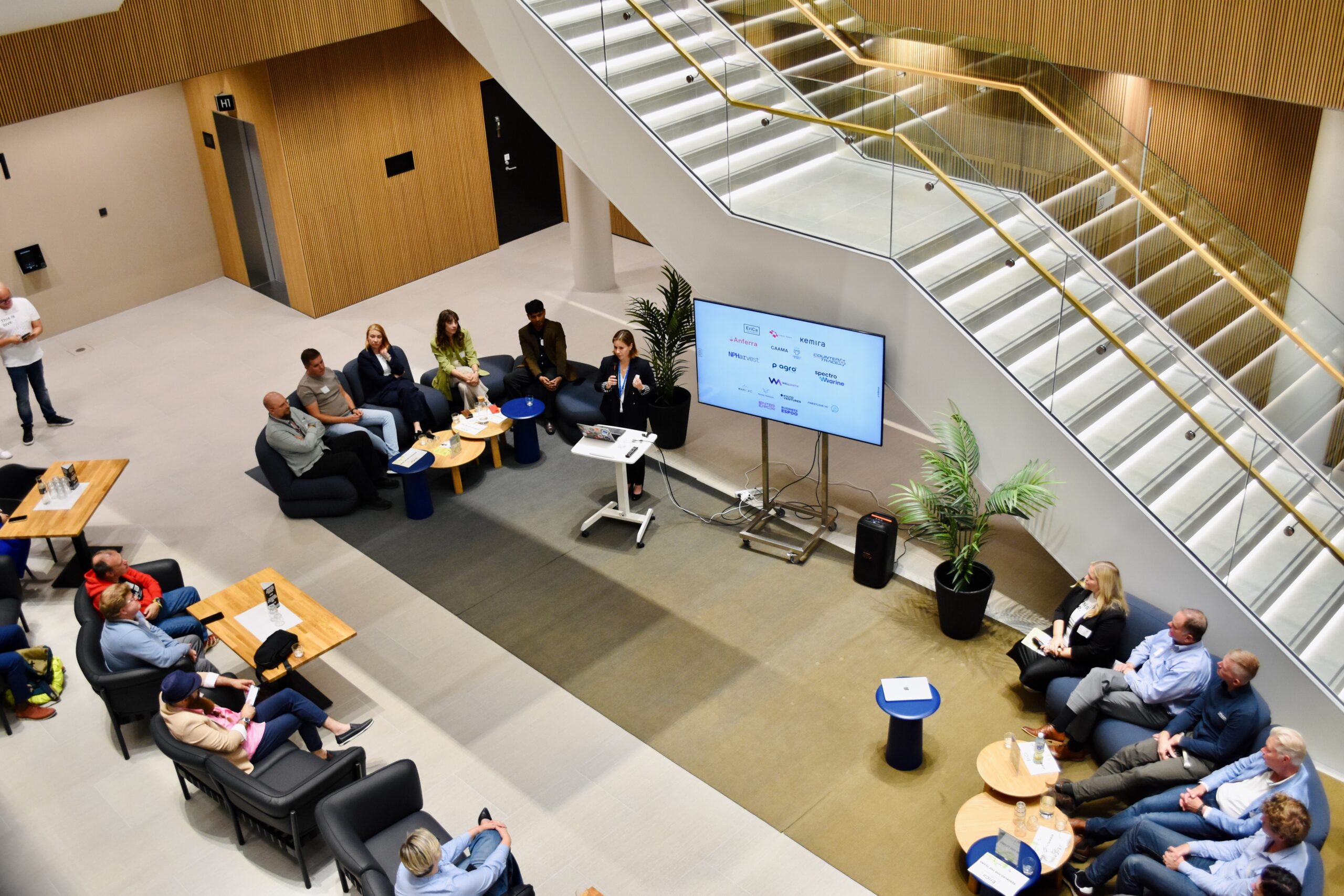
The first cohort ran from March to August 2026 and brought together seven startups and research-based teams developing clean water solutions from five countries:
- Anferra, Sweden
- CAAMA / University of Oulu, Finland
- Countertrace, USA
- NPHarvest, Finland
- P-Agro Minerals, Latvia
- Spectromarine, the Netherlands
- Wellmatix, South Korea
The aim was to help the teams move from lab to market — towards industrial validation, pilots, customers and commercialization.
During the five-month program, teams received 1:1 coaching from Kemira experts, peer support, facilitated workshops, investor introductions and access to the EriCa ecosystem.
The first results suggest that the value was not only in individual meetings or workshops. For many teams, the collaboration changed what they decided to focus on next.

From pilot ideas to concrete validation plans
For several teams, one of the main goals was to prepare for industrial-scale testing and piloting.
Working with industry experts helped turn high-level pilot ideas into more concrete validation plans. Teams received support in defining what data industrial partners would need, which KPIs and technical specifications should be monitored, how results should be analyzed, and what would need to be demonstrated before moving forward.
For some teams, this resulted in detailed pilot or prototype validation methodologies. It also helped clarify the right sequence of commercialization activities: whether the next priority should be sales, technical scaling, validation or collecting further data for future customer discussions.
That kind of clarity can be highly valuable in deep tech development. It helps teams understand not only what to do next, but also what may still be too early to pursue.
Sharper market focus and stronger business models
Technology development is only one part of commercialization. Teams also need to understand where their technology creates the most value and which applications are worth pursuing first.
During the program, teams worked on their market position, value proposition, customer needs and priority applications. For some participants, this meant narrowing down a broad set of potential use cases and focusing on the ones with the clearest customer need and commercial potential.
The collaboration also supported business model development.
For one team, discussions during the program contributed to a pivot towards a new business model. This raised practical questions around customer agreements, responsibilities, risk sharing and how to structure an arrangement that works commercially for both parties.
Industry experience provided useful insight into these questions and into what should be considered when negotiating with customers. The goal was not simply to refine a business model on paper, but to develop an approach that could work in real industrial customer relationships.
Access to expertise, industry and investors
For early-stage deep tech companies, access can be as important as advice.
Several teams highlighted that the program helped them build connections and enter conversations that would otherwise have been difficult to access independently.
Investor introductions opened doors to new discussions, while interaction with Kemira gave teams access to technical and industry expertise in areas such as water treatment, chemistry, industrial applications and piloting.
The value was not simply in introducing startups to a large company. The program created a setting where both sides could explore technologies, applications and commercial opportunities in sufficient detail to identify whether there was potential for further collaboration.
At the same time, Kemira was able to explore how its own chemistry and technical expertise could complement the technologies and innovative products developed by the participating teams.
Funding, new capabilities and continued collaboration
The program also contributed to tangible company-level outcomes.
During the first cohort:
- teams secured combined over 2 M€ of financial investments and funding for further piloting and development
- concrete plans for continued development collaboration with Kemira and other industry partners progressed
- a team recruited a new person to lead commercialization
- an international company established a Finnish entity and gained a home base at EriCa
- teams gained new investor, industry and ecosystem connections
 The industry partner learns too
EriCa Reactor is not designed as a one-directional coaching program. The idea is that startups and industry work together, and both sides learn.
For Kemira, the first cohort provided insight into the entrepreneurial mindset and working methods of early-stage technology companies, including agile ways of working, strong focus and energetic and proactive approach to tackle challenges. Kemira gained insights on how startups prioritize activities, engage investors, rapidly test business concepts, and adapt to customer requirements under resource and time constraints.
The collaboration also created opportunities to evaluate how Kemira’s existing chemistries, technical expertise and capabilities could be combined with emerging startup technologies in different water treatment related applications.
The five-month program resulted in concrete plans for continued development collaboration and Kemira sees lots of potential for future projects. More about these collaborations will be shared as the time is right.
What did we learn?
The first EriCa Reactor reinforced the idea the program was built around: Deep tech commercialization does not happen in isolation.
A strong technology is not enough. Teams need real use cases, customer understanding, industrial expertise, technical validation, industrial piloting, funding and access to organizations that can help them take the next step.
For the first EriCa Reactor cohort, the program’s end was therefore not the end of the process. It was one milestone in a longer journey that continues through pilots, development projects, investment discussions and new partnerships.
 Next: renewable fiber-based packaging
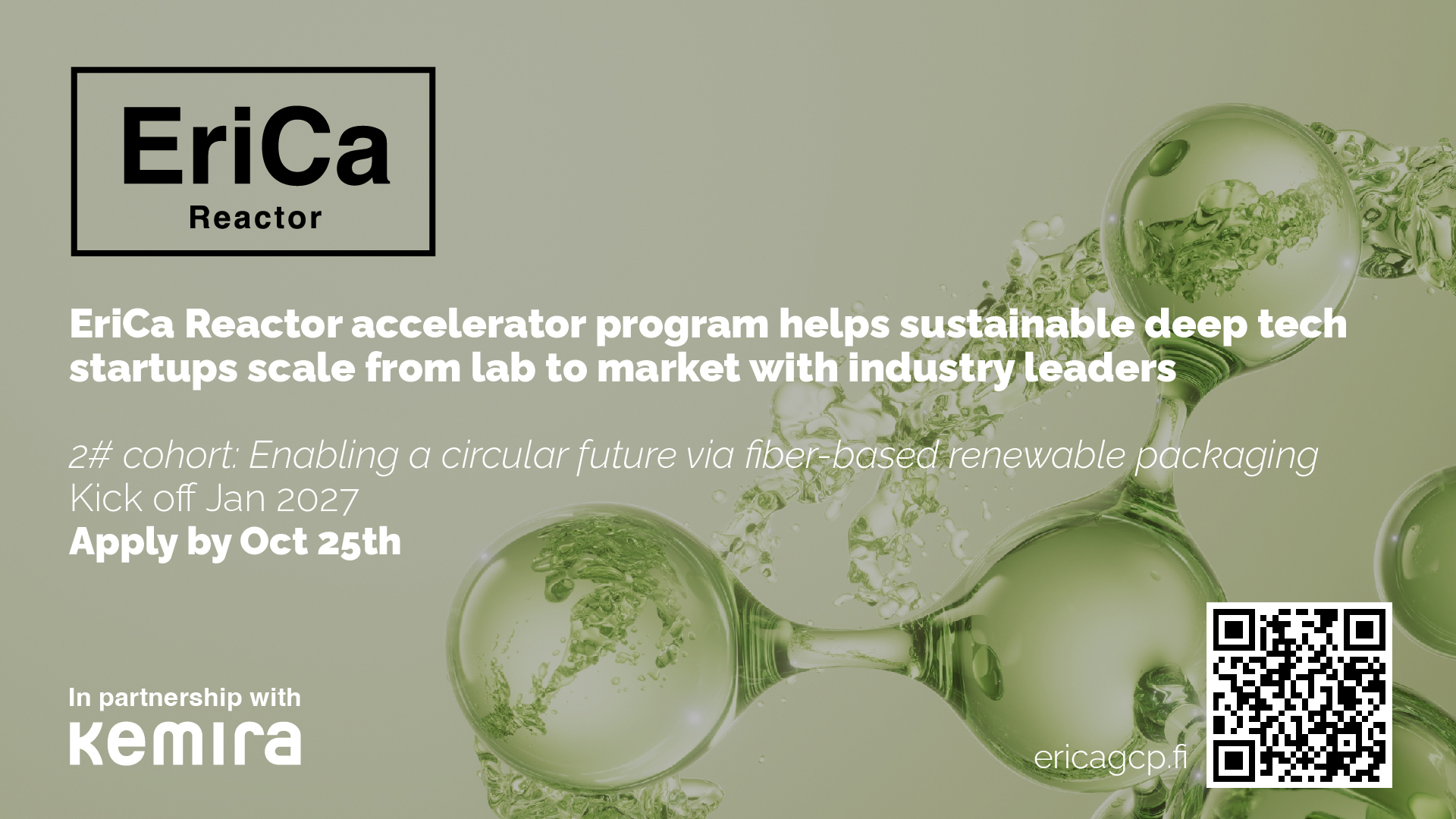
EriCa Reactor is now preparing for its second cohort together with Kemira under the theme:
“Enabling the Future of Circularity with Renewable Fiber-Based Packaging.”
The program is looking globally for 6–8 startups, scaleups and research-based spinoffs developing innovative solutions related to packaging and the fiber industry.
Applications are open until 25 October 2026.
Learn more and apply: https://ericagcp.fi/reactor
Five Japanese researchers seek Finnish partners to bring innovations from lab to market
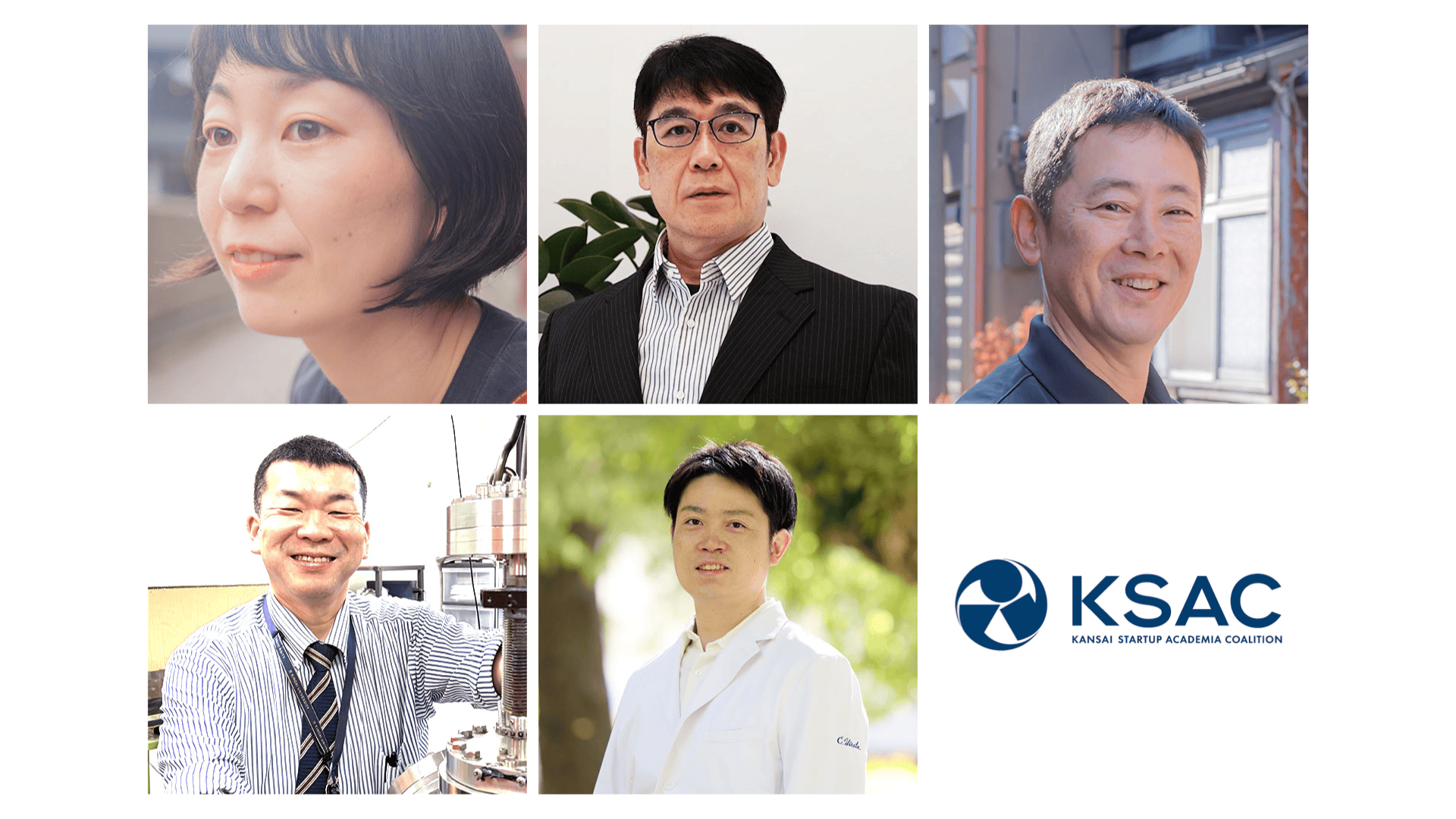
Scientific research can help address global challenges. Turning discoveries into useful products and services takes business expertise, testing and partners. This October, five Japanese researchers will visit Finland to explore how Finnish expertise could help move their work forward.
The KSAC Finland Program brings the researchers to Espoo and Helsinki on 19-23 October 2026. Selected through an application process, they are exploring commercial opportunities for research in water reuse, biodegradable materials, wearable sensors and new treatments.
Finland’s connections between universities, research organisations and companies provide a setting for this work. The programme introduces participants to Finnish partners and helps them assess different routes to market, from starting a company to licensing technology or working with an established business. For Finnish organisations, the visit is an opportunity to find research that could support their own development work and build connections with universities and innovation organisations in Japan.
Crazy Town, the operator of EriCa Green Chemistry Park, is involved as the Finnish coordinator for the program and will also bring the researchers to EriCa.
From research to practical use
The five projects address different problems, but each faces a common question: what will it take for the research to become useful outside the laboratory?
The participants are at different stages of answering that question. Some are exploring possible applications and business models, while others are further along in developing their plans. During the visit, they will meet Finnish experts to discuss market needs, development challenges and possible next steps.
Finnish companies can contribute knowledge of customers, market needs or industrial requirements. Researchers can identify opportunities for joint work and testing. Investors and business development experts can help clarify what evidence and capabilities a project needs before it is ready for investment.
These discussions could lead to joint research, preparation for a pilot or a clearer understanding of where a technology has commercial potential. The programme aims to help participants identify a useful next step and the people who could help them take it.
The five researchers and their work
Haruka Takeuchi — Kyoto University
Takeuchi is developing decentralised water treatment and reuse systems. The aim is to allow water to be treated and reused locally, supporting more sustainable water use.
Shu Ishikawa — Kobe University
Ishikawa is developing uLtra-PGA, a biodegradable polymer produced by fermentation. The initial focus is on cosmetic ingredients, with potential for later use in medical and industrial applications.
Motoshi Sobue — Nara Institute of Science and Technology, NAIST
Sobue is developing a treatment approach aiming for lasting therapeutic effects in conditions such as Parkinson’s disease and drug addiction. The underlying technology also has potential for more immediate applications in other areas.
Hiroaki Nishikawa — Kindai University
Nishikawa is developing thin ceramic films that retain their functional properties while bending. These materials could be used in wearable sensors that monitor signals from the body.
Chuji Hirota — Osaka Medical and Pharmaceutical University
Hirota is part of a team developing a scaffold to support the regeneration of joint cartilage. The approach aims to enable repair in a single procedure without donor tissue.
Read more about the researchers and their projects here.
Building connections that last beyond the visit
The Finnish programme is coordinated and facilitated by Crazy Town, together with Enter Espoo, VTT, Aalto University and other partners, including Helsinki Partners.
Commercialising research also takes trust between people. The programme helps researchers build this social capital through meetings, shared learning and informal conversations. Getting to know each other makes it easier to discuss uncertainties, ask for help and continue working together after the visit.
During Espoo Innovation Deep Dive on 19–22 October, Enter Espoo introduces relevant local organisations and networks. VTT shares its experience in research commercialisation, while Crazy Town helps participants learn from each other, meet potential partners and identify next steps. Aalto Startup Center welcomes the researchers to 100STARTUPS on 21–22 October, where they can meet founders and other participants.
Helsinki Partners supports KSAC in hosting a pitching event 23 October, where the researchers will present their work and meet potential collaborators through one-to-one meetings and networking.
Meet the researchers in October
Finnish companies, researchers, investors and organisations supporting research commercialisation are invited to meet the participants.
To explore a meeting during the visit, contact the Crazy Town programme team at projects@crazytown.fi
Tell us which project interests you and what you would like to discuss. Suggestions for relevant contacts are also welcome.
Two open events offer an opportunity to meet the researchers and learn more about their work:
20 October, 16:00–18:30, Espoo | Japan–Finland deep tech afterwork
An informal gathering at EriCa with the researchers, KSAC representatives and Finnish participants. Join to exchange ideas and discuss opportunities for cooperation. Details and registration >>
23 October, 10:00–15:00, Helsinki | Japanese Researchers’ Pitch & Meet-up
KSAC and Helsinki Partners host a day of researcher presentations, networking and individual meetings. Programme and registration >>
About KSAC
Kansai Startup Academia Coalition (KSAC) supports entrepreneurship and university-based startups in Japan’s Kansai region. It brings together universities, companies, financial organisations and local governments to help research reach practical use and international markets.